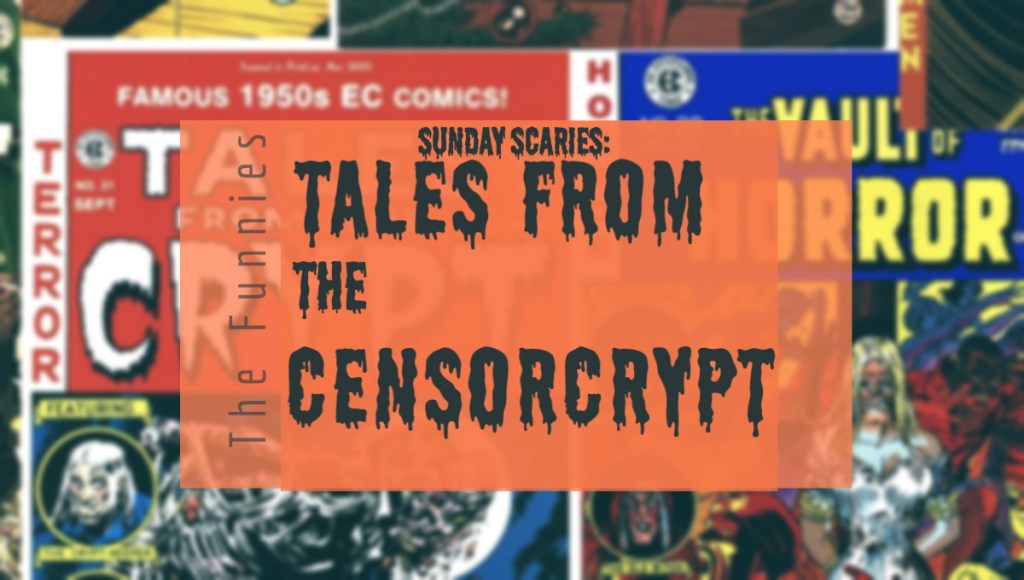
While modern pop culture trends have embraced and grown the superhero archetype in comics, the horror and supernatural thriller concept are another genre primed for the visual expression of storytelling comics offer. While I often bring up the Comics Code Authority’s strict censorship guidelines post Seduction of the Innocent, horror comics have fallen into the particular sub-section of creation that traveled to the underground as a result of those guidelines.

Entertaining Comics was the publishing company responsible for Tales from the Crypt, which in turn became the critically acclaimed horror anthology series on HBO that introduced the Cryptkeeper to pop culture (And then to Halloween Horror Nights, where I first learned about him and the comics.) EC published two other horror titles- The Vault of Horror and The Haunt of Fear– as well as several science fiction and war titles. The EC brand would not last past the censorship hysteria of the mid-1950s, but ironically has been cemented in place as a foundation of modern horror storytelling, surpassing the Comics Code Authority in longevity and pop culture relevance.
Section B of the CCA focused on Horror comics, and EC had several issues presented at the 1954 Senate hearing that established the CCA. The rules and regulations demanded by the CCA were so intense, the watering down of EC’s comics was nearly impossible.
- (1) No comic magazine shall use the word horror or terror in its title.
- (2) All scenes of horror, excessive bloodshed, gory or gruesome crimes, depravity, lust, sadism, masochism shall not be permitted.
- (3) All lurid, unsavory, gruesome illustrations shall be eliminated.
- (4) Inclusion of stories dealing with evil shall be used or shall be published only where the intent is to illustrate a moral issue and in no case shall evil be presented alluringly, nor so as to injure the sensibilities of the reader.
- (5) Scenes dealing with, or instruments associated with walking dead, torture, vampires and vampirism, ghouls, cannibalism, and werewolfism are prohibited.
When asked at the hearing about his comics, EC Co-Editor William M. Gaines volunteered to testify, saying:

EC Comics History
Mr. Gaines: My only limits are the bounds of good taste, what I consider good taste.
Sen. Kefauver [alluding to the cover illustration for Crime SuspenStories #22]: This seems to be a man with a bloody ax holding a woman’s head up which has been severed from her body. Do you think that is in good taste?
Mr. Gaines: Yes, sir, I do, for the cover of a horror comic….
Clearly, while his intentions were good, they certainly didn’t read that way to the public. Gaines and fellow co-editor Al Feldstein’s refusal to conform to the CCA’s guidelines resulted in a distribution freeze on EC’s publications. Stores were simply not willing to carry their horror titles, or any of their other titles without the CCA’s seal of approval.
Gaines and Feldstein began to attempt to appease the Authority, but many fans of the brand now reflect on these regulations as a thinly disguised attempt to eradicate the company from the industry based on their political and societal critiques in their comics. The code resulted in the cancellation of their horror, crime and failed attempt at more “realistic” titles, leaving their Science Fiction series (now titled Incredible Science Fiction). After the two publishers refused to edit Incredible Science Fiction at the demand of CCA enforcer Judge Charles Murphy.

Murphy demanded the main character of the story be redrawn. Why? The story was about an astronaut who, while visiting another planet, determines the planet’s robotic inhabits not be allowed into the Galactic Republic until they cease treating one color of robots as inferior to the other, as both operated with the same functions. When the human astronaut who makes this decision removes his helmet, he’s revealed to be a black man. When Gaines and Feldstein refused, Murphy told them to remove the sweat from the man’s face, which were pictured as stars on his dark skin. The duo again refused, this time with language definitely not approved by the CCA. This would be the last issue of an EC Comic to be published.
While EC Comics would have gone under, they maintained a deeply loyal fanbase. One of their former titles had undergone a change in classification that left it outside of the CCA’s grasp, and MAD Magazine proved that the style of art and storytelling EC had implemented was not for children even when it was called a comic.
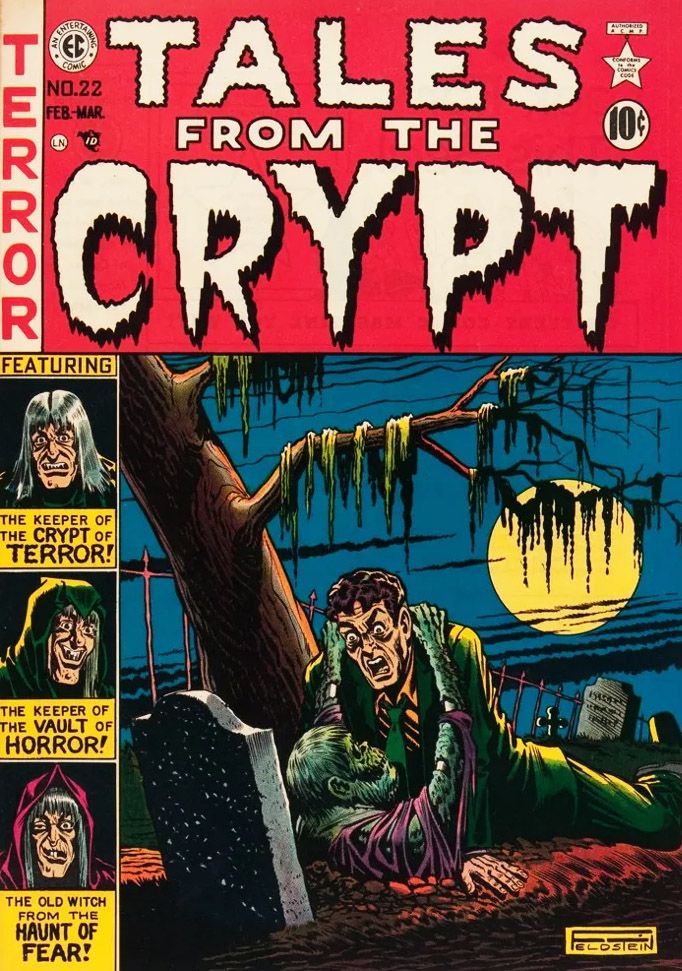
The Code officially went defunct in January 2011, with The Comic Book Legal Defense Fund acquiring the rights to the CCA’s approval seal later that year. In contrast, EC Comics reprints and essays were released by various teams and publishers from the mid 1960’s onwards, with the most recent release titled The History of EC Comics released in 2020. And that’s not looking at any products dealing with the television adaption of Tales from the Crypt.
While the CCA helped shape the industry into what it is today, the stories and styles it looked to obliterate from the market managed to find ways to survive and thrive even when pushed underground. Horror has quickly regained its position as one of comics’ most prolific genres after the CCA’s very public near-extinction. But looking at modern horror comics, the elements of EC’s horror-telling success are present, be that influence from the print titles or their pop culture adaptations. The regulations of Comic Code Authority may have been seeking to bury horror comics, but the longevity of EC Comics has allowed horror comics to rise from the dead.
 Pages and Panels
Leave a comment