
Note: I am employed by Marvel’s parent organization, The Walt Disney company. All thoughts and feelings expressed in this review are my own and do not necessarily reflect those of the company. This post is not sponsored or endorsed by Marvel or The Walt Disney Company.
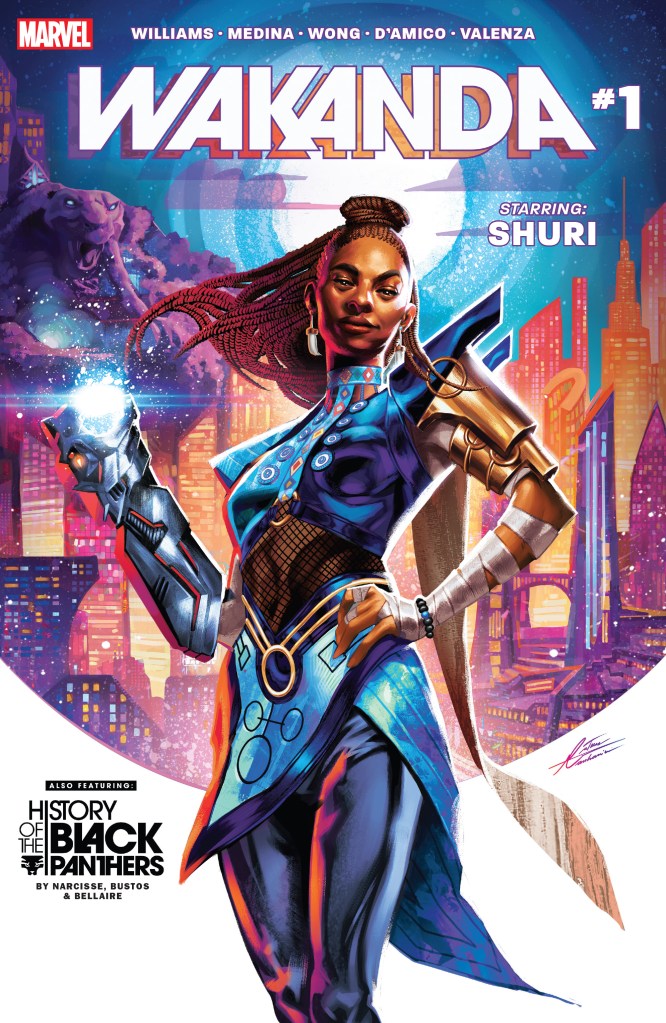
As Marvel Studios continues to drum up interest for next month’s Wakanda Forever, Marvel aims to address some of the questions and emotions regarding the character and storylines in the wake of Chadwick Boseman’s passing and the impact it’s had on the MCU storyline moving forward. One way they’ve decided to do so is by releasing a new Wakanda mini-series.

While this mini-series isn’t directly tied to the film and is spinning off the current run of the comic Black Panther series (which has held some mixed reviews), it’s pretty wise from a marketing standpoint to start the Wakanda mini-series with an issue focused on Shuri, her former position as Black Panther, her desire to protect her people, and the “definitive history” of all those who have held the title of Black Panther.
While Shuri’s story is short, with a fun face-off against Rhino, the real reason to check out this series lies in the first part of the history of the Black Panther powers and the history of the fictional African nation.
Blending the supernatural, scientific, and folklore aspects of the Wakandans, writer Evan Narcisse’s framing format of Shuri and Queen Ramonda in a museum teaching Wakandan children about their history feels at some moments a little like the safe route to express this information. But the moments of levity from the children interspersed at just the right moments, the style of art from Natacha Bustos, and Jordie Bellaire’s incredible colors, it manages to also create the feeling of being in a museum with a bunch of happy, interested, engaged, and fairly well-behaved children while on a tour. That may not be true of everyone, but it managed to convey that very particular emotion to me, and I’m a huge fan of that feeling.
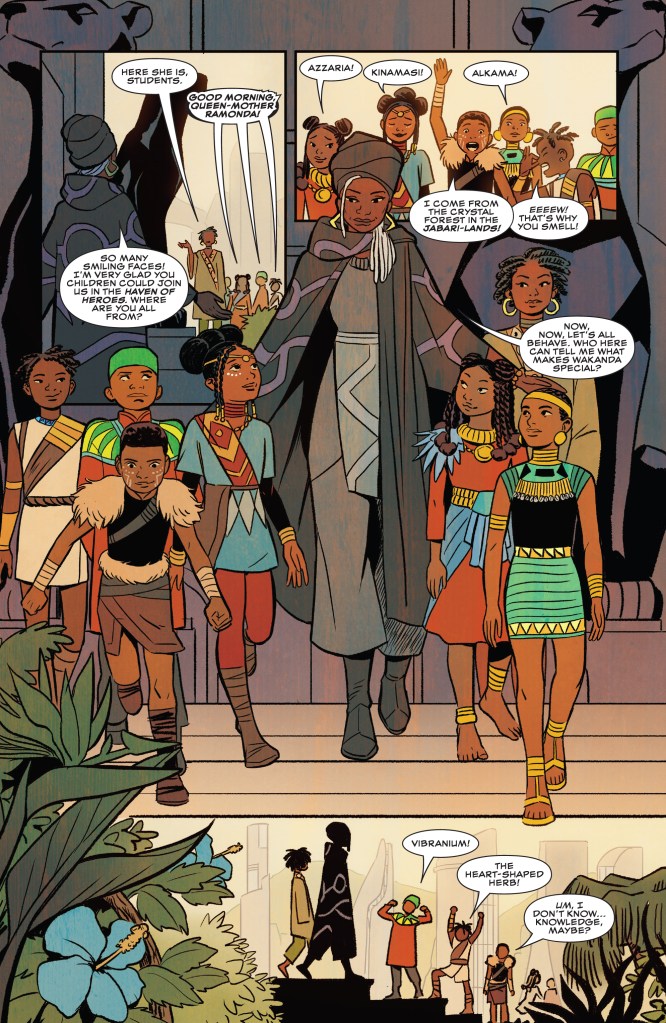
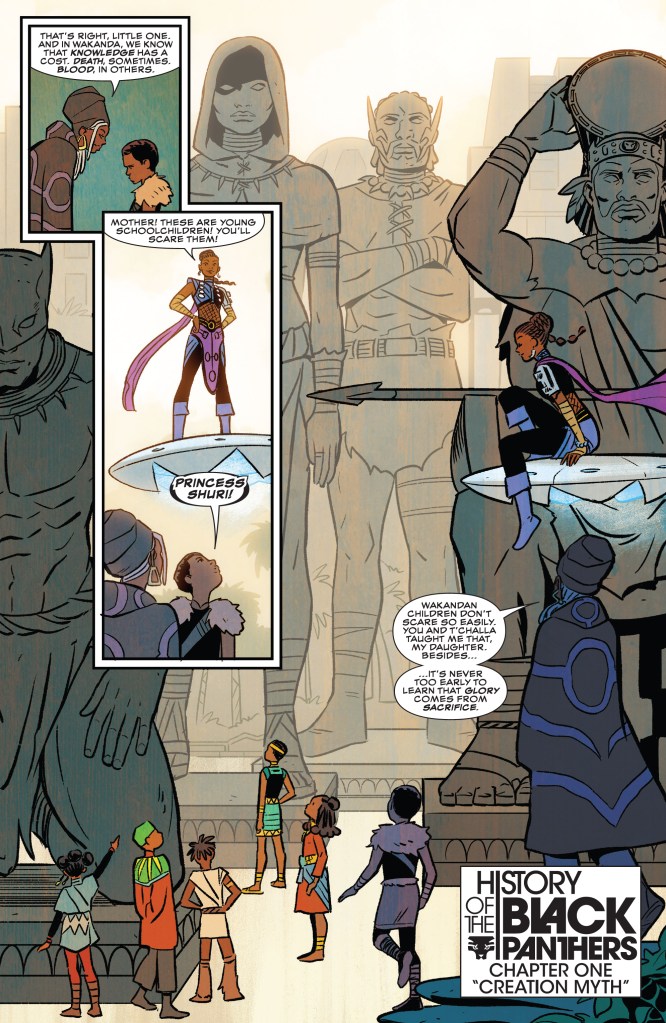
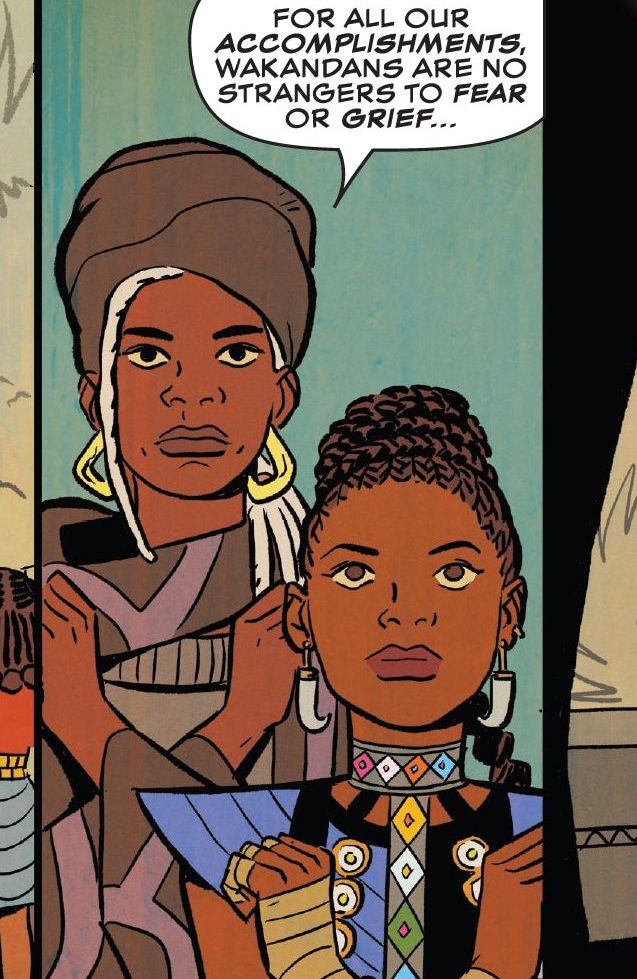
Building off of that feeling are the annotations following that story, which are like getting to wander around and read the displays in more detail. For me, the biggest highlight was note 15, where it identified that the Wakandan crossed arm salute was created for the film and adapted into the comics. Going back into the history section of the story, the only time the salute is made and noted comes after Shuri talks about T’Challa. As Shuri and Queen Ramonda make the gesture, they discuss fear but also grief.
This feels very much to me a quiet acknowledgment of the man we lost whose impact on the character helped bring the culture to life, done in a way that didn’t break the fourth wall. For that reason, it’s my favorite panel, although the styles of the panels and the splash pages really appealed to me in this section.
If you’re looking to get hyped for Black Panther: Wakanda Forever or just enjoy feeling like you’re taking a great museum tour, check out Wakanda #1, on shelves now.
 Pages and Panels
Leave a comment