
The first of September is Letterer application day, and this week’s Primer is sourced from Marvel’s excellent breakdown of some Letterer definitions!
Letterers: Letterers are the graphic artists who take the writer’s words and add them to the artwork, but their job extends beyond the simple transfer from script to the published page. Letterers also control pacing, convey emphasis, create sound effects, distinguish spoken words from thoughts, and so much more.
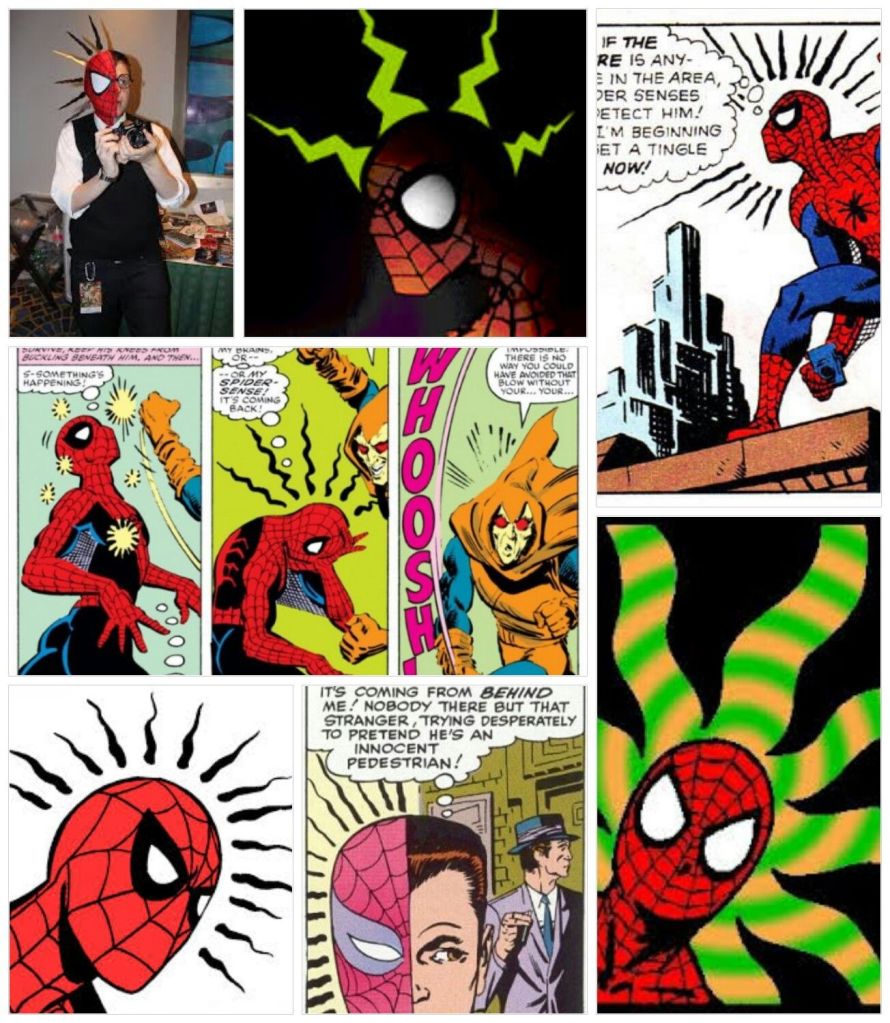
Speedlines: The lines that emanate from a character communicate rapid movement.
Emanata: Coined by artist Mort Walker, the term emanata refers to descriptive pictograms that hover near a character and express something about their current emotional state. Emanata can also communicate warmth when radiating from an object such as a cup or food.
Asterisks: An asterisk indicates that more information can be found elsewhere in the book, typically in a caption or different issue of the comic.
Double Dash: Two single dashes indicate an interruption to a character’s speech.
Grawlixes: Randomly mixed letters, symbols, and scrawls replace obscenities in a word balloon.
Ellipses: Three dots at the end of a sentence communicate an unfinished thought.
Thought Balloons: Also known as thought bubbles, these puffy balloons sit above a character’s head and are used to express a character’s inner thoughts. They were once common but are rarely used in contemporary comics. Today, captions are often used in their place.
Captions: A caption is text inside a box that is visually separate from the rest of the panel. Captions are used to provide information that art and dialogue can’t express. This includes exposition, third-person narration, and a character’s personal thoughts.
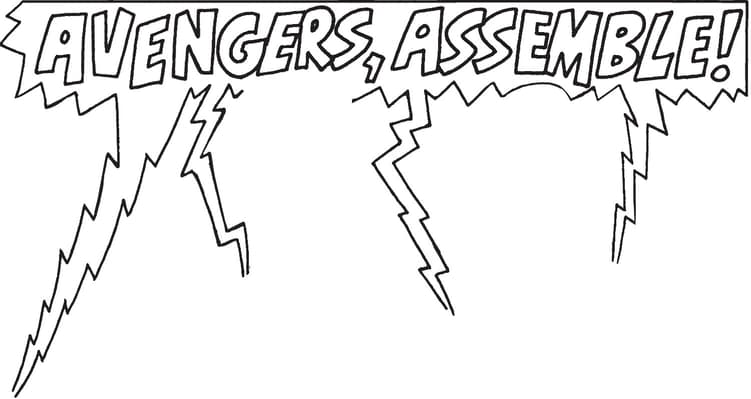
Broadcast: Sometimes called radio balloons, these craggy-lined balloons are designed to give the impression that speech is coming from an electronic device such as a radio, television, or walkie-talkie.
Air: The space between the edges of a word balloon and the interior text is called air. Letterers aim to keep the air tight as a way to preserve space for the artwork.
Balloon tail: The piece of a balloon that stretches toward the speaker’s mouth is called a tail or pointer.
Join: A connection between multiple word balloons is used when speech requires more space or is expressing two connected thoughts.
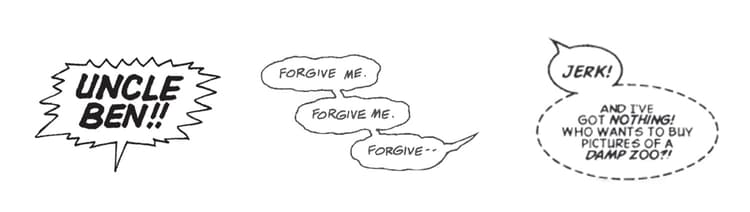
Bursts: Jagged edges on a word balloon indicate yelling, screaming, or generally loud speech.
Deflated: A wavy outline can communicate weak speech.
Whisper: A dashed outline indicates quiet speech. Small text inside a big balloon or a gray border can also represent whispering.
For more information on Marvel’s lettering styles and other aspects of creating the Marvel Brand Comics, check out Marvel By Design. Note: Just so you know, Pages and Panels may receive a portion of proceeds from our Amazon affiliate links. However, we also highly recommend shopping from independent comic shops. They’re a massive part of the comics community. Find your local shops here.
 Pages and Panels
Leave a comment