

Back in 2021, I was invited by Netflix to attend an early screening of Sweet Tooth. I hadn’t heard of the title before and picked up the series before I watched the premiere. They’re very different. But for me, Sweet Tooth opened the door to a different kind of comic genre than I was accustomed to and introduced me to Jeff Lemire as a writer/artist. His work is now among the top of my favorites lists, and Gus is to thank.
The comic series is far darker than the Netflix adaptation. There are deeper threads of conservation and ecological decay as a result of human actions, commentary on religion and identity, and an examination into the formation of parental/pseudo-parental relationships. Plus, a lot more blood and storytelling devices that would absolutely not read as well on film in the post-covid pandemic era.
The hybrid hero, Gus, demonstrates even more growth in the comic than he did in the series thus far. Readers are treated to that very emotional and difficult process of growing up because you have to through Gus’s journey. It manages to cover that kind of coming-of-age story niche without falling deeply into fluff or contrived tropes. Heavily exaggerated features characterized Gus’s “Otherness” with exaggerated protruding ears and antlers. But his human features are almost Burton-esque. Deep-set cheekbones and jaws create a sense of gauntness to Gus in contrast to his age. Wide eyes, mostly white with small dark pupils convey that he’s looking at something frightening. In the comic, this was to help convey the gritty apocalyptic wasteland of the world after the collapse of society. The use of bold lines and angular design of both landscape and character design tie in closely with the nightmare scapes of comic Gus’s dreams. Colors lean towards darker, drab shades of neutral palettes, allowing red to stand out more dramatically. The red of Gus’s plaid shirt, the red from coughing with The Sick, and the copious amounts of blood from Jeppard and the other characters’ violent natures. All of these designs drastically differ from the intentional softness of the Netflix series.
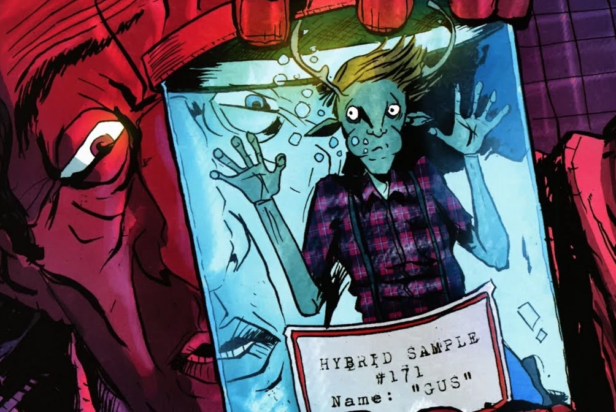
Gus’s transition to adulthood is focused on finding a people of his own and understanding why he was so isolated. Comic Gus has more of a violent edge to him- both as a product of his raising and as an acknowledgment of the intended readership, being published under DC’s adult imprint, Vertigo. The targeted audience for Vertigo was adult readers, allowing for blood, violence, and religious ideology to play to an age-appropriate audience. This meant the comics were darker in the design, but also in the tonal quality. They focused on the more adult aspects of drastic worldview change.
 Pages and Panels
Leave a comment